

By: OakPoint Wealth Management
By Eric Parnell
“Team by team reporters, baffled, trumped, tethered, cropped Look at that low playing, fine, then”
–It’s the End of the World as We Know It (and I Feel Fine), R.E.M., 1987
Coming in a hurry with the Furies breathing down your neck. Last week, I submitted an article discussing the potentially overlooked downside risks confronting investors as we move toward the closing months of 2026. And while I am troubled by the fact that CCC & Lower US High Yield spreads continue to blow out to 10.85% as of this morning, which is approaching the highest levels we’ve seen in the post-2022 inflation period, I must admit the “end of all mankind” was not part of my stress test scenario analysis. But such is the AI fallout debate that has erupted over the past week. The “Skynet” related buzz will undoubtedly continue, but it remains as important as ever to keep things in perspective when it comes to managing your investment portfolio.
So what are the latest reporter headlines that have left so many baffled. An Anthropic staffer quits and takes to social media to accuse his former employer and OpenAI of “gambling with our lives” at the pace of superintelligent AI development. Another Anthropic researcher claimed a greater than 10% chance AI eliminates all humans within the next decade. Then the Anthropic CEO penned an essay calling for the industry to work together to slow the pace of frontier AI development.
All of these headlines are low planes flying kind of stuff (X > 10% where X = all humans gone). And don’t get me wrong, I’m all for some shiny steel guardrails and a well-considered set of traffic signals on this new technology. But I don’t think we woke up just a few days ago to the idea that the development of AI might have been and continue to be fraught with difficult to quantify risks. With this in mind, it is important that we do not overreact to the headlines and maintain a cool head when making investment decisions on this, or any other “shocking” headlines for that matter.
Birthday party, cheesecake, jelly bean, boom! I’ll give financial markets credit following this latest headline barrage, as it seems to have learned the lesson from the same story that plays over and over and over . . . across financial markets year after year after year. . .
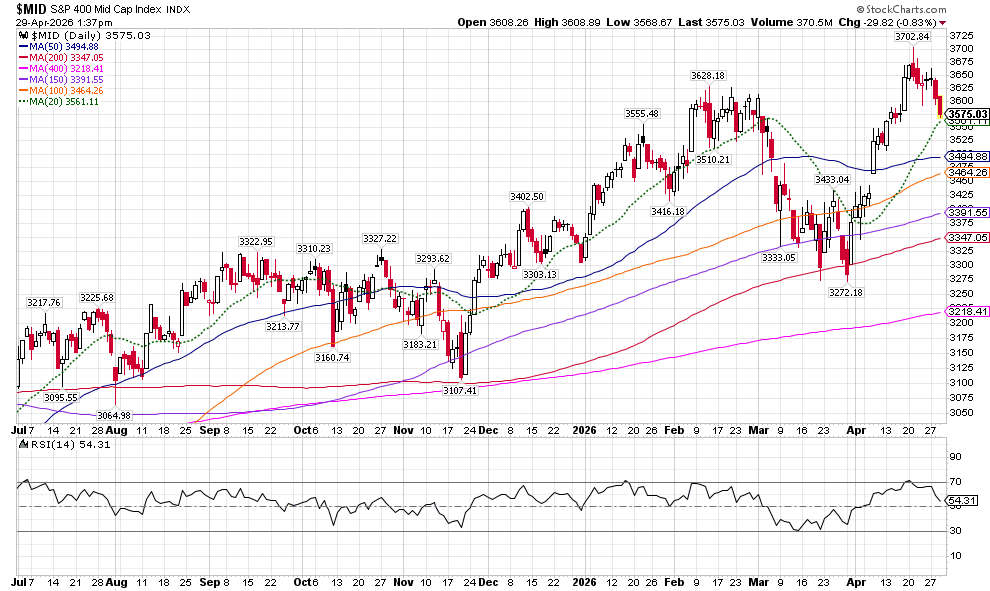
So how then did the markets respond in the wake of these latest headlines? Really, as it should have, which is a nothingburger shoulder shrug as demonstrated in the chart below. Dating back to September 8-9 when the Anthropic staffer first posted on social media, the market has continued in a sideways grind that has been ongoing dating back to the beginning of June. Same for the technology heavy NASDAQ 100 that one would rightfully think would sustain the most direct impact from the flashing headlines that the AI revolution that was supposed to change the world might actually end it as we know it.
If anything, the investor propensity to overreact to headline news is as old as the market itself. Despite all of the lauding of financial markets being fully rational and incorporating all available information in the long run, they can sure be emotional in the short run. It happens time and time again, and if anything, it brings attractive buying opportunities.
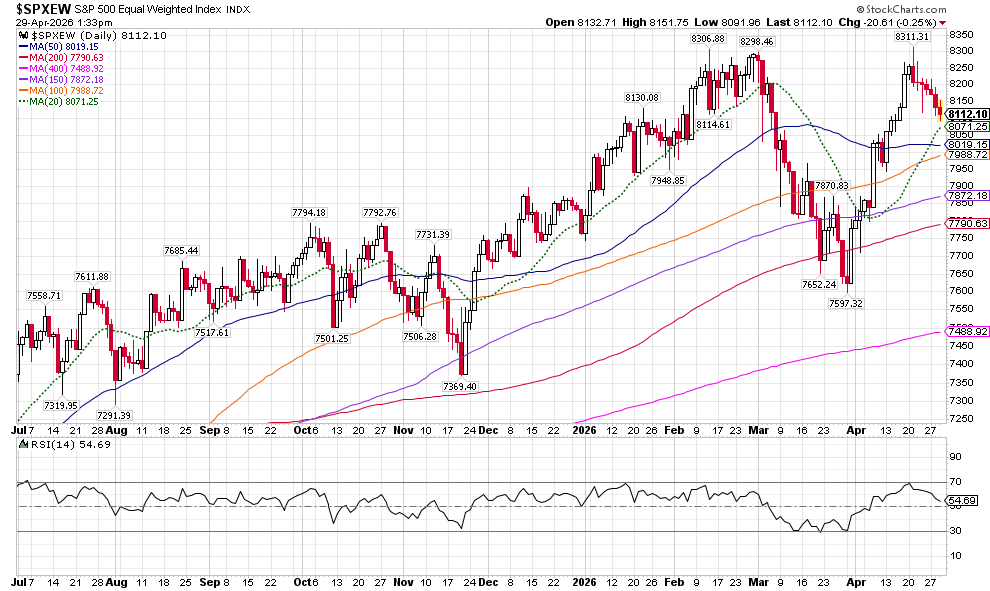
As a recent example, remember when people seemingly woke up one day late last year and decided that AI was going to render technology software companies obsolete? Never mind that the AI boom was well into its third year and I’m guessing more than a few people had already thoroughly considered this idea along the way, the idea suddenly grabbed everyone’s attention and off we went. Software companies subsequently lost over -30% of their value in short order as those that thought “huh, there’s a good point here that these software companies aren’t going to be around that much longer” raced out of dodge. What’s happened since? Well, those software companies apparently are all still around, and software shares have rallied by as much as +40% since bottoming in mid-April to get back to breakeven as of last November. Not only was the selling overdone, but the selling brought with it opportunity for those that are not getting whipsawed by the headlines.
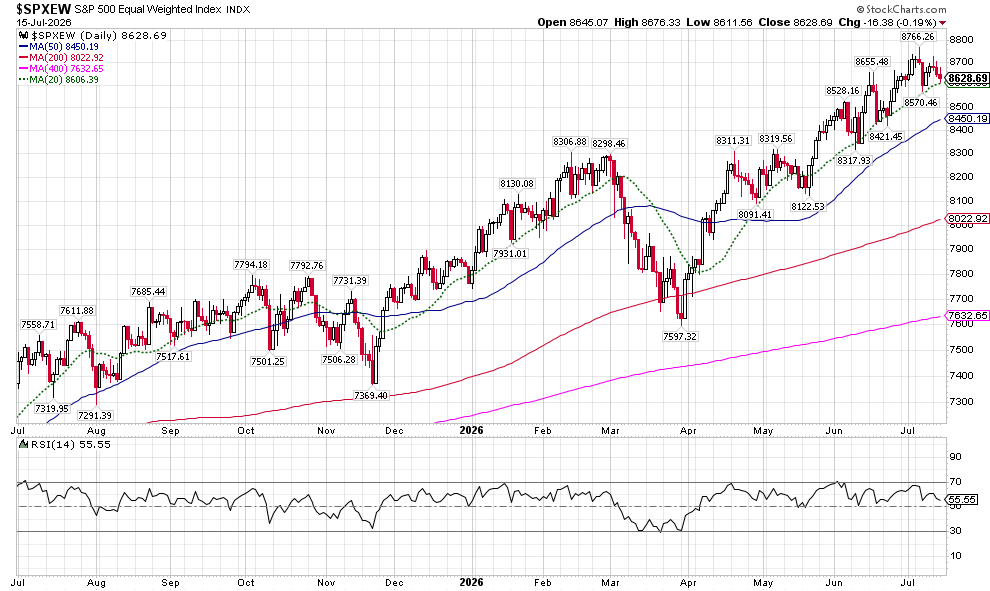
Let’s go back a bit further to an area of the market far less alluring than AI. On June 16, 2017, tech behemoth Amazon announced that it was diving aggressively into the grocery store biz with its purchase of Whole Foods. Shares of grocery store retailers like Kroger were immediately crushed by more than -10% on the news, as the knee jerk assumption by investors was that Amazon that had spent the previous two decades putting various retailers out of business, putting groceries squarely next on the hit list. Never mind that the grocery business is very different than selling books (for example, a book doesn’t perish on my shelf after two weeks). Never mind that Amazon had stumbled badly in its previous forays into grocery such as Amazon Go. Never mind that Walmart had already been in the marketplace selling groceries competing on price (with the likes of Aldi and Lidl also increasingly arriving at the time). Never mind that Amazon was buying arguably one of the most premium priced grocery retailers at the time in “Whole Paycheck”. Nah, they were going to buy Whole Foods and instantaneously put every other grocery store in town out of business. That was 2017. Today, all of the grocery stores across town are still open, and Whole Foods continues to serve its same organically food focused premium grocery shopper with arguably better relative prices than they had before. What about grocery store share prices from the likes of Kroger (not a recommendation then or now to buy Kroger, but simply for illustration purposes as a representative publicly traded grocery store retailer). After bottoming a few months later in September 2017, shares of Kroger rose +65% versus the S&P 500 at +15% over the next year. And in the near decade since through today, the shares of the grocery store have handily outperformed the headline S&P 500 by more than eighty cumulative percentage points. AI boom eat your heart out – so much for the apparent death of grocery stores at the time.
“Offer me solutions, offer me alternatives and I decline”
–It’s the End of the World as We Know It (and I Feel Fine), R.E.M., 1987
(And I feel fine). It’s happened countless times before, and it will happen countless times again in the future. We will awaken some morning in February 2027, August 2034, and November 2094 (maybe you will, but I’ll be long gone by then leaving the rest of mankind behind me) and breaking news will shock some segment of the market if not all of it in a negative way. Consider the news carefully, look through the fog and haze, and continue to maintain your long-term investment discipline. And for those that are so nimbly inclined, such episodes may also bring attractive buying opportunities.
Eric Parnell, CFA | Chief Market Strategist
Eric Parnell is the Chief Market Strategist for Great Valley Advisor Group. Eric applies his expertise in finance and economics to manage multi-asset portfolios, mitigate risk, deliver advice that promotes informed decision-making, and facilitate investors achieving their short-and long-term investment goals. He leads the GVA Asset Management platform overseeing the management of asset allocation models for GVA advisors and their end clients. Eric also provides economic, market, and investment related analysis and communications to the GVA network of advisors and clients as well as the broader financial media. Eric has appeared on CNBC, CNN, Money Matters TV, NPR-Marketplace, Seeking Alpha, and CFA Magazine.
Eric has more than 25 years of financial and investment experience. Prior to joining GVA, Eric was the Founder and Director of Gerring Capital Partners, a Registered Investment Advisor serving clients nationwide. Eric also previously served as the Director of Investment Communications for SEI Investments and as an Economist at Moody’s Analytics. Eric is also an active member of the CFA Society of Philadelphia and the Global Interdependence Center.
Disclosure: I/we have no stock, option, or similar derivative position in any of the companies mentioned, and no plans to initiate any such positions within the next 72 hours. I wrote this article myself, and it expresses my own opinions. I am not receiving compensation for it. I have no business relationship with any company whose stock is mentioned in this article.
Investment advice offered through Great Valley Advisor Group (GVA), a Registered Investment Advisor. I am solely an investment advisor representative of Great Valley Advisor Group, and not affiliated with LPL Financial. Any opinions or views expressed by me are not those of LPL Financial. This is not intended to be used as tax or legal advice. All performance referenced is historical and is no guarantee of future results. All indices are unmanaged and may not be invested into directly. Please consult a tax or legal professional for specific information and advice. LPL Compliance Tracking #1177073
The economic forecasts set forth in this material may not develop as predicted and there can be no guarantee that strategies promoted will be successful. All investing involves risk including loss of principal. No strategy assures success or protects against loss.